A daily habit, not another portal.
Most wellness programs engage the people who would have done it anyway. Alively activates the frozen 80%, the people who need it most and who are driving your costs. One daily action per person. No app-store scavenger hunt, no challenge of the week, no wellness theater.
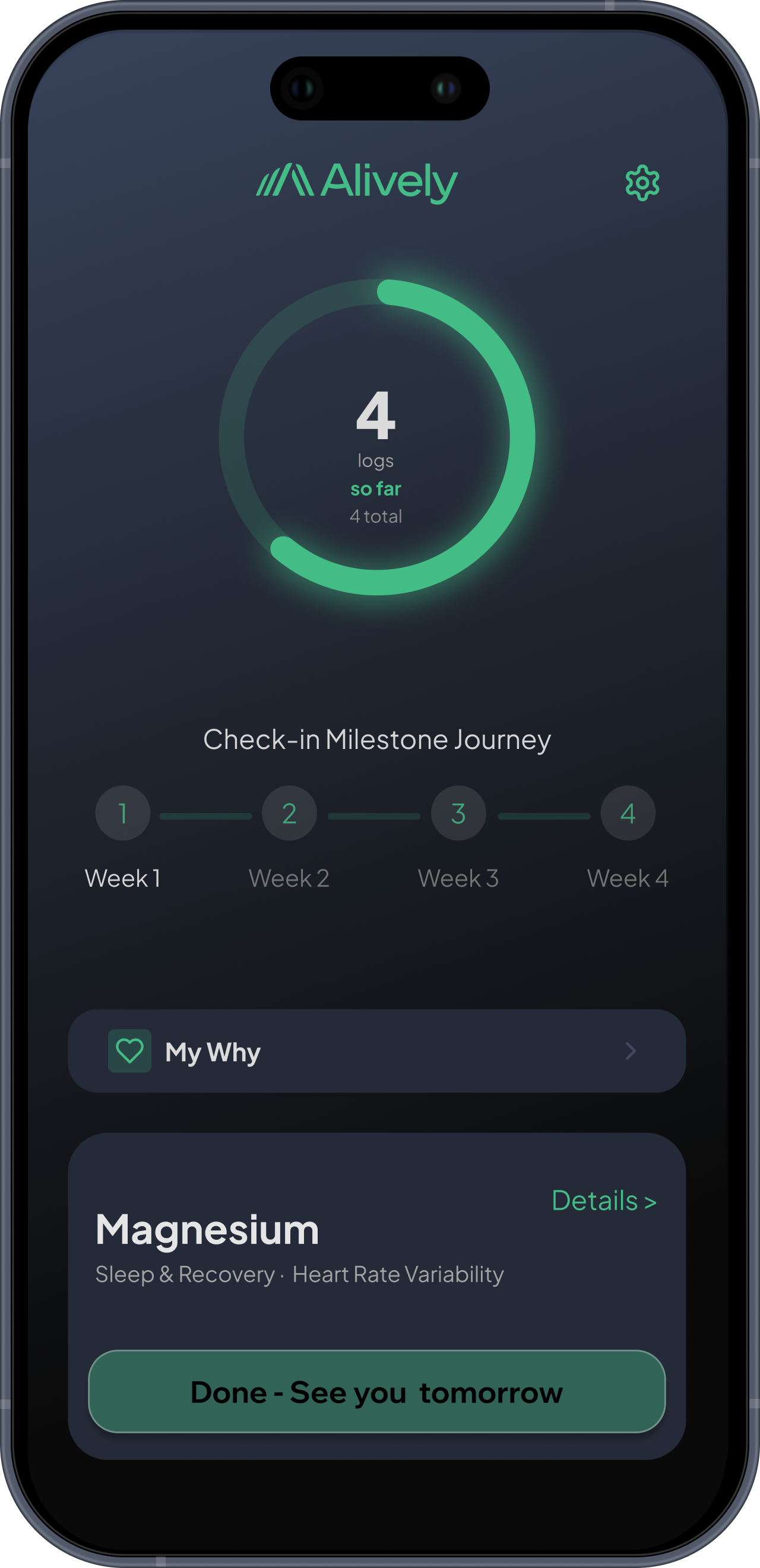
One small action a day, from their own data.
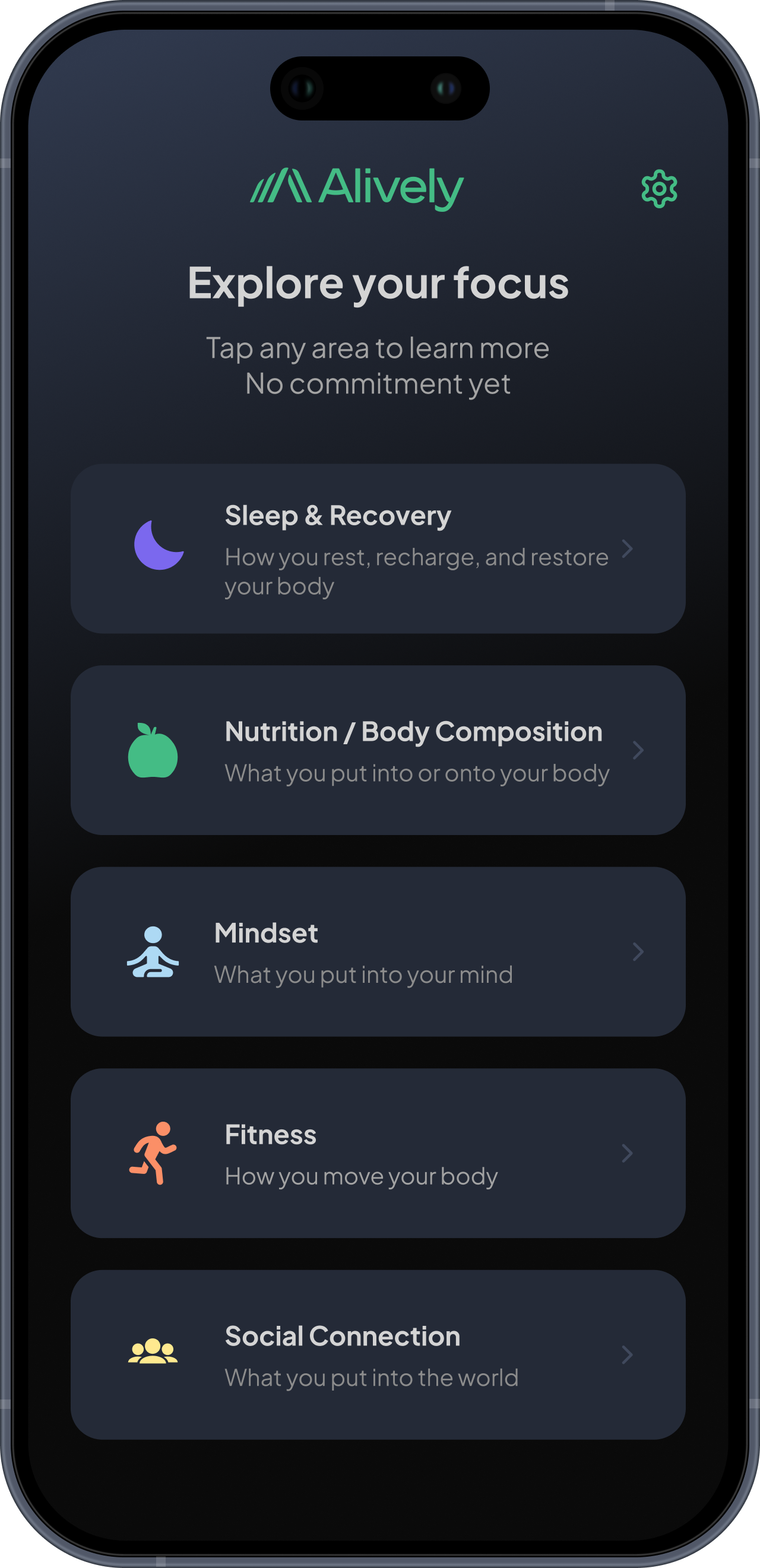
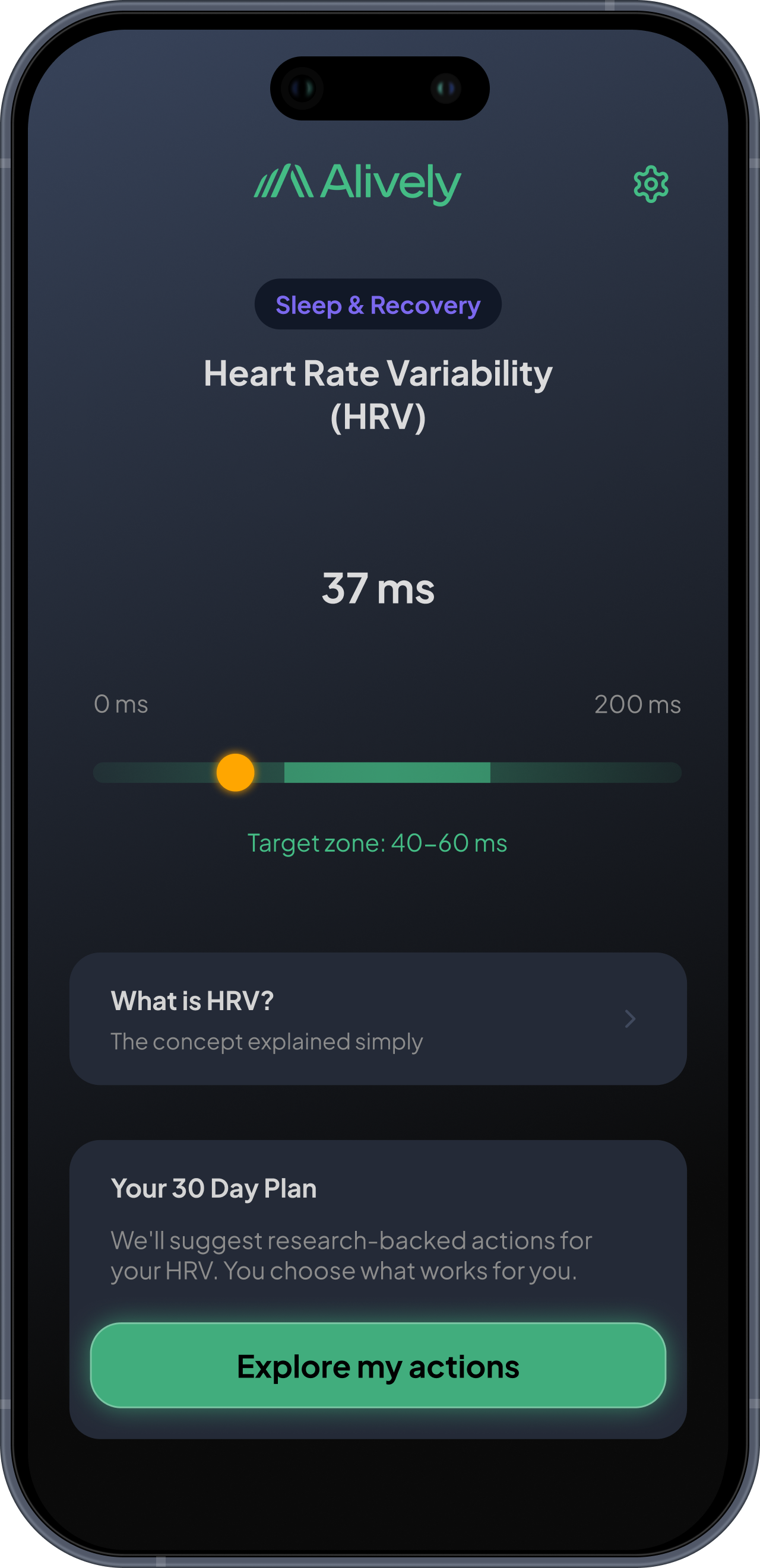
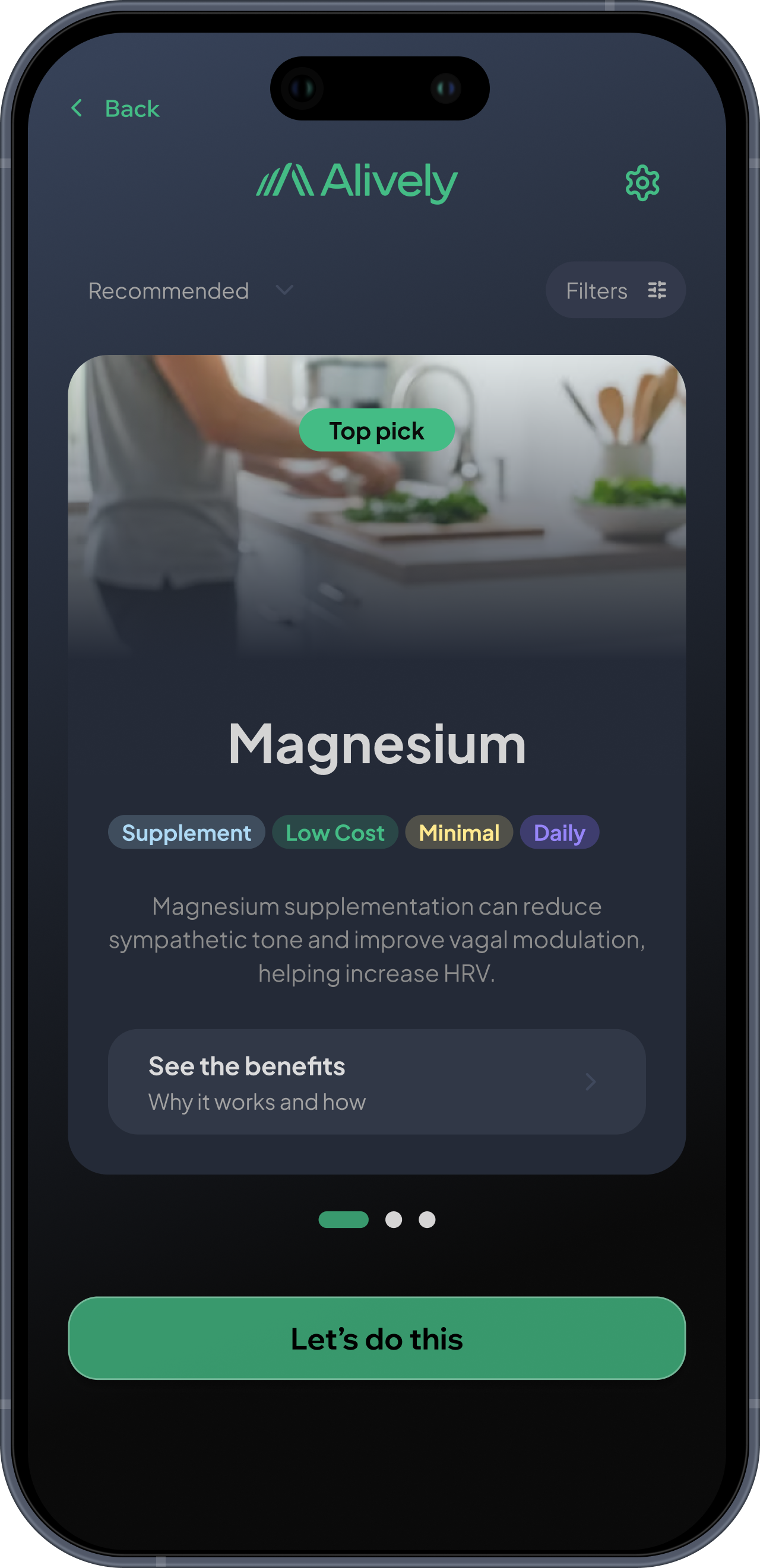


Every employee can get a wearable, at no cost.
Each enrolled employee chooses a device from our official partners.




Already have a wearable device?
Use any device that can connect to Apple Health or Google's Health Connect.


* A wearable is not required to take part.
Built for the people every other program misses.
 Alively
Two plans, one paycheck.
Every input is one you can check against your own payroll file.
No implementation fee, no capital outlay. We invoice only after net savings exceed our fee.
Per enrolled employee, per year. We plan at $750 and size it against your actual census first.
Illustrated on a $39,000 salary. Varies by wage, state, filing status, and elections.
+$107.63 a month in take-home, about $1,292 over the year, in this illustration.
It sounds too easy. Here is the part people go looking for.
-
→
Employees have to participate. They opt in once a year and actively onboard. No participation, no benefit. The program only works if you run the rollout, and we support that with you.
-
→
It is real medical care, and it is documented. Reimbursement follows substantiated care the employee actually received. Completing a scan or a form does not create, increase, or guarantee a payment.
-
→
It is not a refund of anyone's salary. The reimbursement is employer-funded under a separate plan and is capped in the plan document. The tax efficiency is a by-product of running two real plans properly, not the product.
The tax structure behind this is almost fifty years old. That's the point.
Section 125 has been in the tax code since 1978, and Section 105 is older. Together they are why your health premiums and your FSA already come out pre-tax. This program uses the same provisions, the same way, under two standard plan documents.
The policy arc
One in three federal tax dollars goes to Medicare, Medicaid, and other federal health programs, which is why prevention has stayed federal policy under both parties.
- 1942 Congress defines medical care for tax purposes as amounts paid for the diagnosis, cure, mitigation, treatment, or prevention of disease. The same words are in the law today, as §213(d).
- 1978 Congress establishes the §125 Cafeteria Plan in the Revenue Act of 1978, allowing pre-tax employee benefits. It is the provision every FSA runs on.
- 2010 The Affordable Care Act raises the wellness incentives employers can offer from 20% to 30% of coverage cost and requires preventive care with no cost-sharing. HHS told Congress the aim was to reduce chronic illness and slow the growth of health-care costs.
- 2015 Executive Order 13707 directs federal agencies to apply behavioral science, including default options and choice design, building on the success of automatic enrollment in retirement plans.
- 2016 Medicare's actuary certifies the Diabetes Prevention Program as reducing net Medicare spending, the first preventive service model ever certified for national expansion.
- 2019 IRS Notice 2019-45, issued under the first Trump administration, expands the preventive care that HSA-qualifying high-deductible plans can cover before the deductible, to include care for chronic conditions such as insulin, statins, and blood-pressure monitors. The pre-tax treatment of prevention keeps widening, across both parties.
- 2025 Executive Order 14212 establishes the Make America Healthy Again Commission, directing the federal government to focus on reversing chronic disease. Testifying to Congress in June, HHS Secretary Robert F. Kennedy Jr. said HHS would launch "one of the biggest advertising campaigns in HHS history" to get Americans using wearables, with the goal of every American wearing one within four years.
- 2026 CMS launches the ACCESS Model (Advancing Chronic Care with Effective, Scalable Solutions), a Medicare model paying for technology-supported prevention and management of chronic disease, with more than 150 approved participants including wearable makers.
Three documents, in the order a decision actually happens.
The Employer Overview
What every enrolled employee gets, how the two plans work, and the money, on two pages. The one to forward first, and the one that explains what you are rolling out.
Get the overview →HR Leader's Playbook
How to bring Finance a prevention strategy that is already funded. The leakage reframe, the offer, and the five objections. A business case, not a product explainer.
Get the playbook →CFO + Legal Pre-read
Both plan documents, the substantiation basis, the fixed-indemnity FAQ, and the policy context your tax counsel will ask about. Built to forward.
Get the pre-read →Questions Finance will ask.
The ones we hear most often, with the answers we stand behind — including what the program is, what it is not, and who is eligible. Anything else, talk to us.
Talk to usMost benefits cost you money every month. This one costs you money every month you wait.
The payroll-tax efficiency behind Alively is already in your P&L. It goes unclaimed until you are live. Planned conservatively, that is about $750 per enrolled employee per year, roughly $62 a month per person, and there is no way to claim it retroactively.
Illustrative, from the published planning figure of ~$750 net per enrolled employee per year. Actual amounts vary by wage, state, filing status, eligibility, elections, enrollment, and payroll administration. Not a guarantee of savings, and not legal or tax advice.
-
It's already funded.
No implementation fee and no capital outlay. We invoice only once your cumulative net savings clear the fee.
-
4–6 weeks to live.
About three hours of your team's time, most of it payroll setup. We do the rest.
Home of Healthspan
Conversations with the researchers, physicians, and operators who informed how Alively works.
Including guests such as: Dr. Michael Greger, Dr. Matt Kaeberlein, Dr. Tommy Wood, JJ Virgin.